 Basics
The X-ray is the oldest and most common medical scan — fast, cheap and low-dose. Here's how it works, what it's used for (and what it isn't good at), what to expect, and the tiny amount of radiation involved.
 Procedures
A barium swallow uses a contrast drink and real-time X-ray to watch food and liquid move through your throat and oesophagus. Here's what it's for, how to prepare, and what to expect afterwards.
 Body parts
A chest X-ray is a quick, very low-dose look at the heart and lungs. Here's what it's used to investigate, why the radiation is so small, and what to expect on the day.
 Body parts
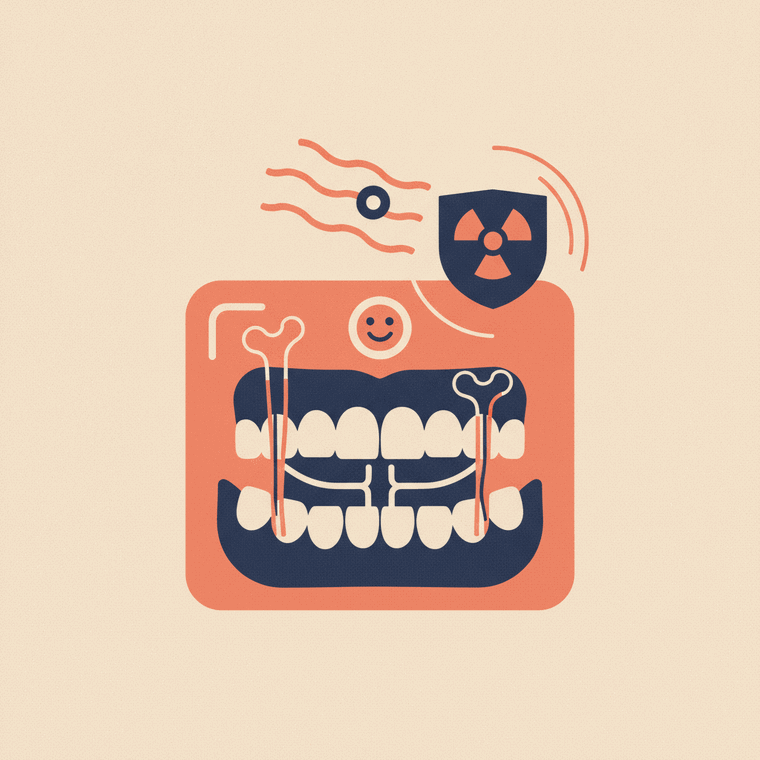
Dental X-rays use one of the lowest radiation doses in all of medical imaging. Here's what they show that a dentist can't see by looking, how small the dose really is, and the precautions used.
 Basics
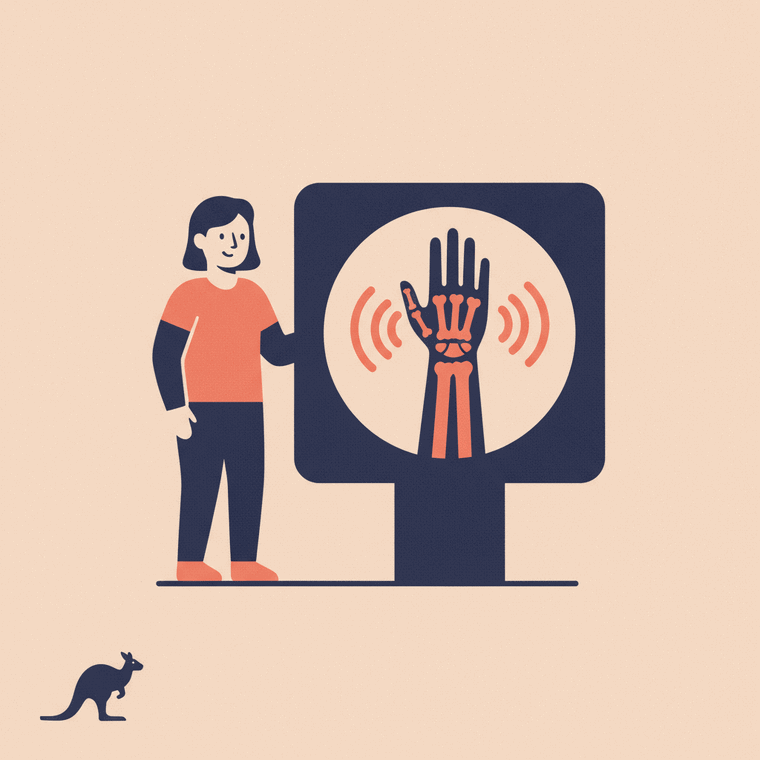
Fluoroscopy is X-ray shown as a live, moving picture — used both to watch the body in action and to guide procedures. Here's how it works, what it's used for, and the radiation involved.
 Preparing
Most plain X-rays need no preparation at all. Here's the short list — mainly removing metal — plus when to mention pregnancy and the few X-ray types that do need prep.
 Technology
Some scans can come to you — portable X-ray and bedside ultrasound are used at the bedside, in emergencies and in regional Australia. Here's how mobile imaging works and its trade-offs.
 Safety
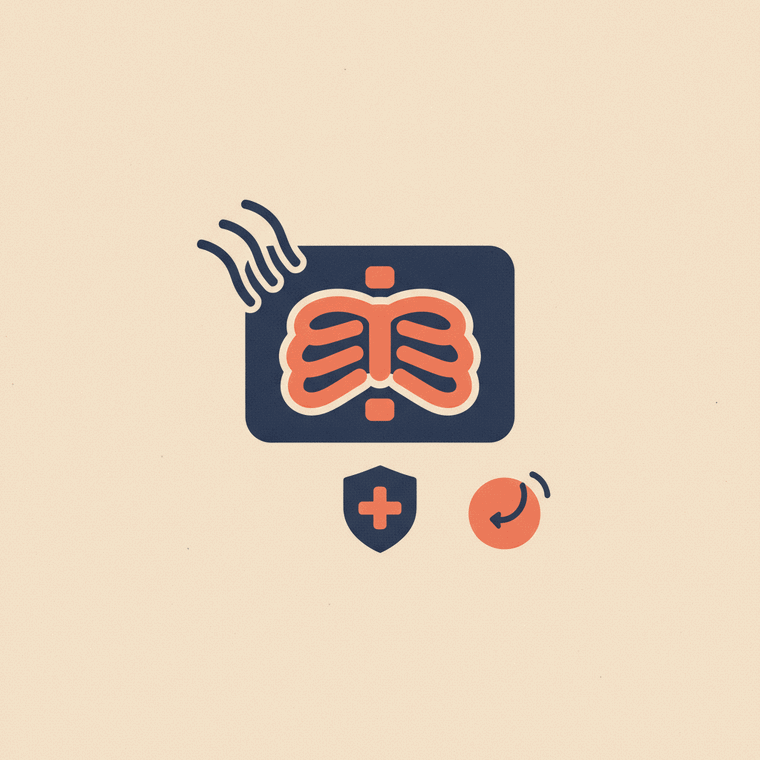
A plain X-ray uses a very low dose of radiation with no short-term effects. Here's the honest picture of the tiny long-term risk, in Australian terms, and how it's kept as low as possible.
 Basics
Ever wondered why bones look white and lungs look black on an X-ray? Here's how an X-ray image is formed, what the shades of grey mean, and why metal glows so brightly.
 Uses
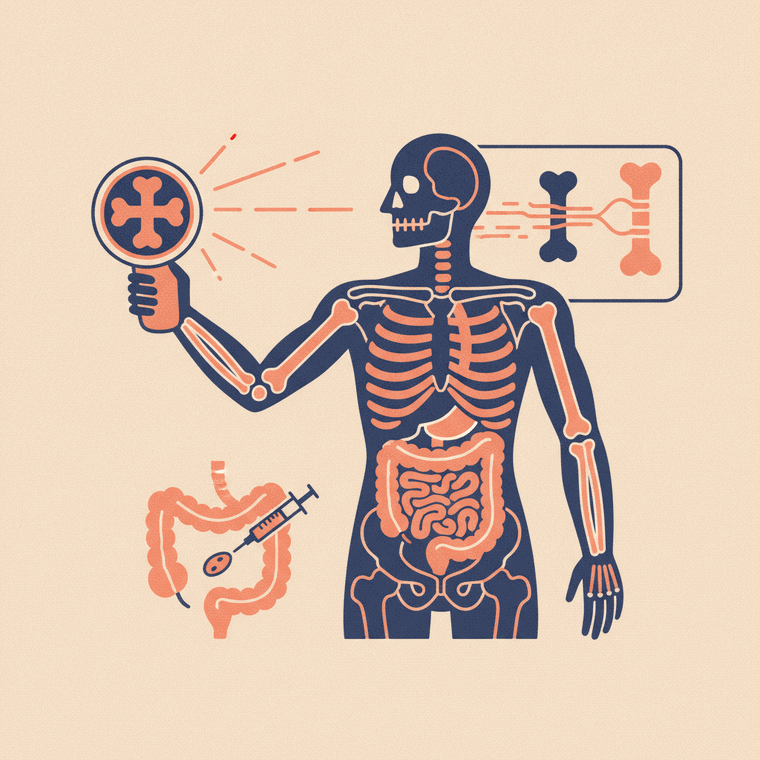
UsesFluoroscopy — real-time X-ray — is used to diagnose and to guide procedures. Here's the full range, from barium studies of the gut to angiograms, joint injections and placing catheters.
 Results
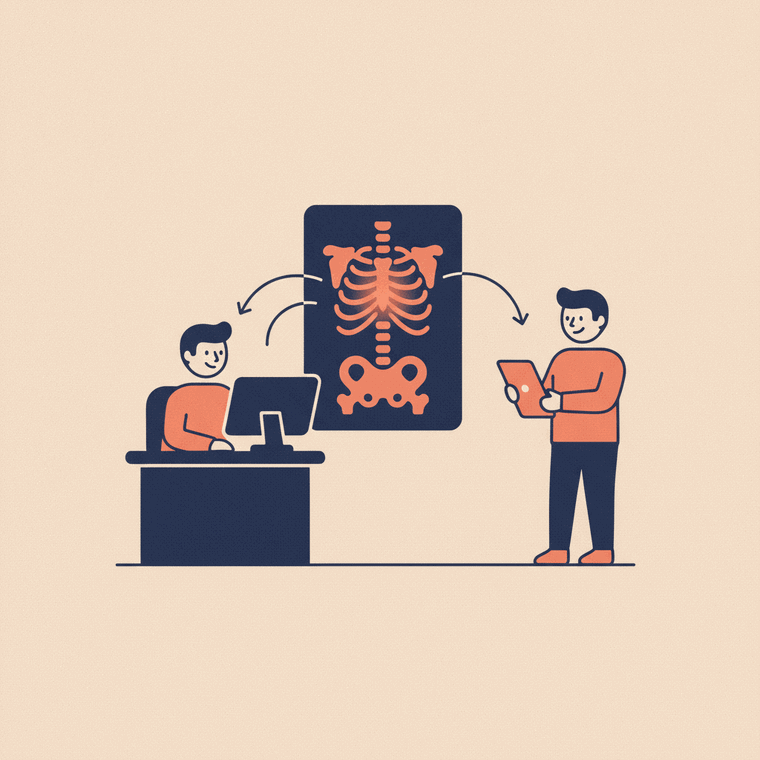
Your X-ray is taken by a radiographer but interpreted by a radiologist, who reports to your doctor. Here's how the process works in Australia, why you don't get results on the spot, and how to get a copy.
Browse all 12 imaging topics, or jump straight to costs and Medicare.