 Basics
Nuclear medicine is different from other scans: a tiny radioactive tracer shows how your organs are functioning, not just what they look like. Here's how it works, what it's used for, and why it's safe.
 Scans
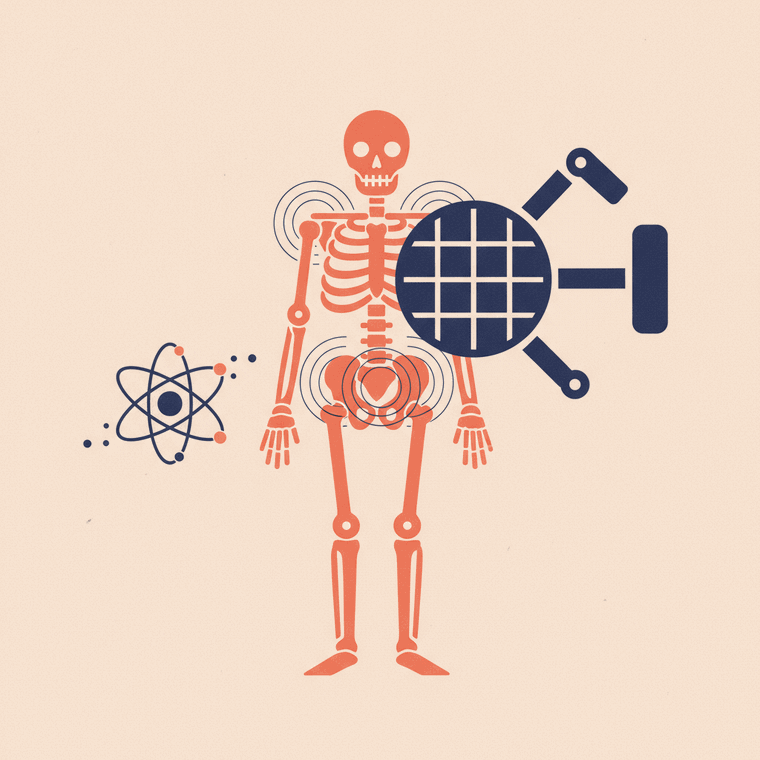
ScansA nuclear medicine bone scan uses a tracer to reveal areas of unusual bone activity — fractures, infection, arthritis or cancer spread — across the whole skeleton at once. Here's how it works and the radiation involved.
 Results
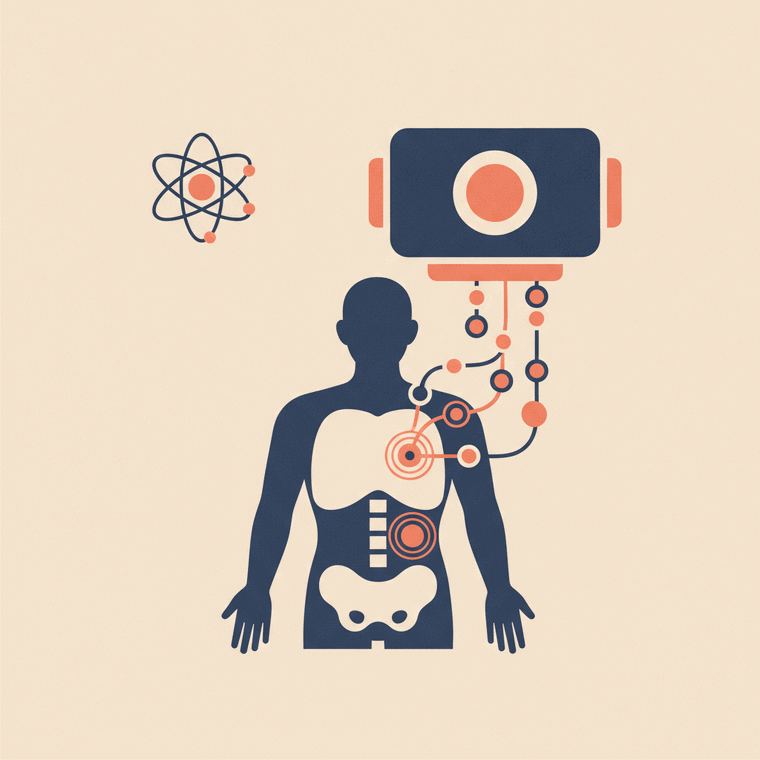
A bone scan highlights areas of increased bone activity — but a hot spot can mean many things, not just cancer. Here's how bone scan results are read and why a follow-up scan is often needed.
 Scans
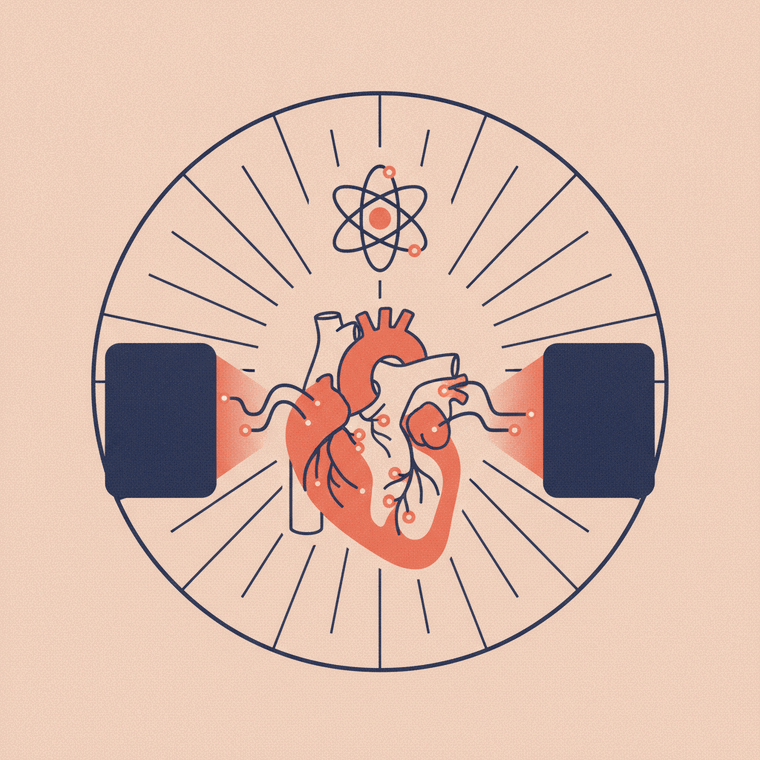
ScansA cardiac nuclear scan (myocardial perfusion scan) shows how well blood reaches your heart muscle, at rest and under stress. Here's what it's for, what the 'stress' part involves, and what to expect.
 Uses
UsesPET scans show how active tissues are, which makes them powerful for finding and assessing disease — especially cancer, but also epilepsy, brain and heart conditions. Here's how PET helps with diagnosis.
 Which scan?
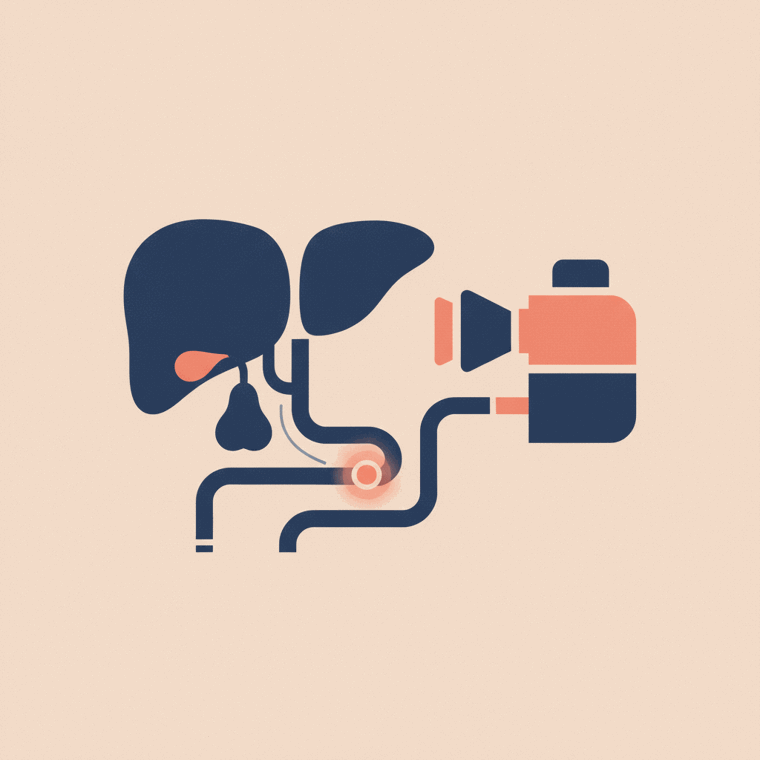
A HIDA scan is a nuclear medicine test that shows how your gallbladder and bile ducts are working — useful when ultrasound alone can't explain gallbladder pain. Here's what it involves.
 Uses
UsesBeyond a single scan, PET helps guide cancer treatment decisions — at diagnosis, during treatment and in follow-up. Here's where it fits in the bigger picture, alongside your treating team.
 Preparing
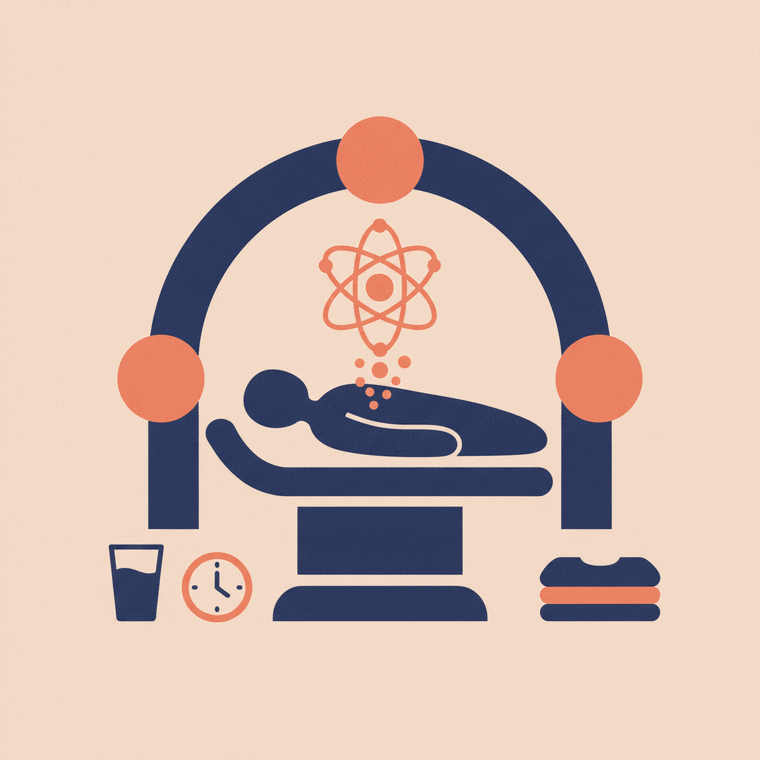
A PET scan needs more preparation than most — usually fasting, controlled blood sugar and rest beforehand. Here's why each step matters, and what to expect on the day.
 Safety
Nuclear medicine uses a small radioactive tracer — so is it safe? Here's the honest picture: a low dose, over 60 years of use, no known long-term effects, and the simple precautions afterwards.
 Results
PET results highlight areas of activity — but an active spot isn't always cancer. Here's how PET results are read, what SUV means, and how you get them.
 Uses
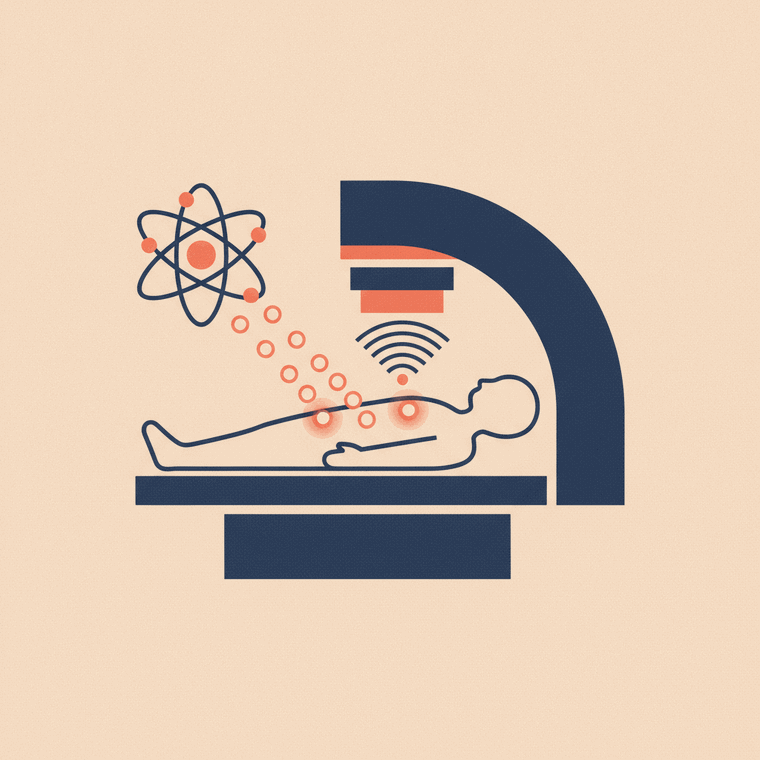
UsesPET is one of the most useful scans in cancer care — for staging, checking whether treatment is working, and detecting recurrence. Here's how it's used in Australia.
 Scans
ScansA PET scan uses a small radioactive tracer to show how tissues are functioning — most often to detect and stage cancer. Here's what a PET scan shows, when it's used in Australia, and the radiation involved.
 Compare
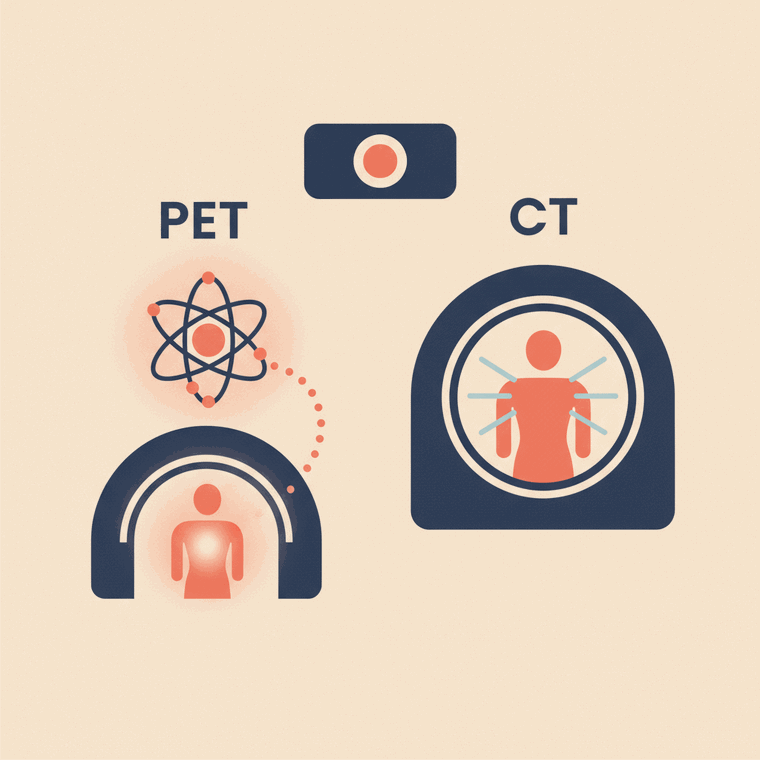
PET and CT are often done together, but they show very different things — function vs structure. Here's how they differ, and why PET-CT combines them.
 Technology
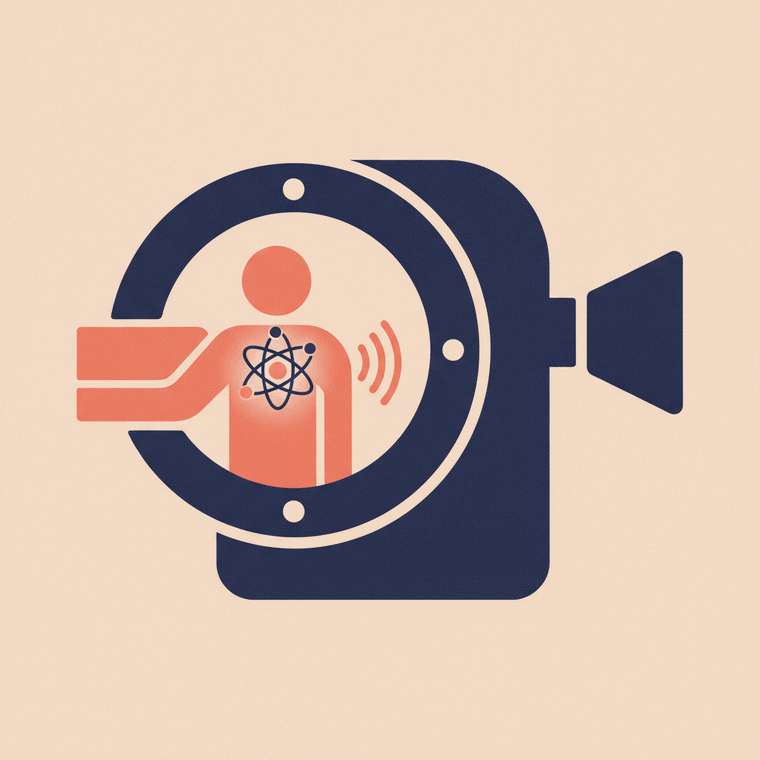
PET-CT combines a PET and a CT in one machine — function plus anatomy. Here's why combining them is so powerful and what the scan is like.
 Basics
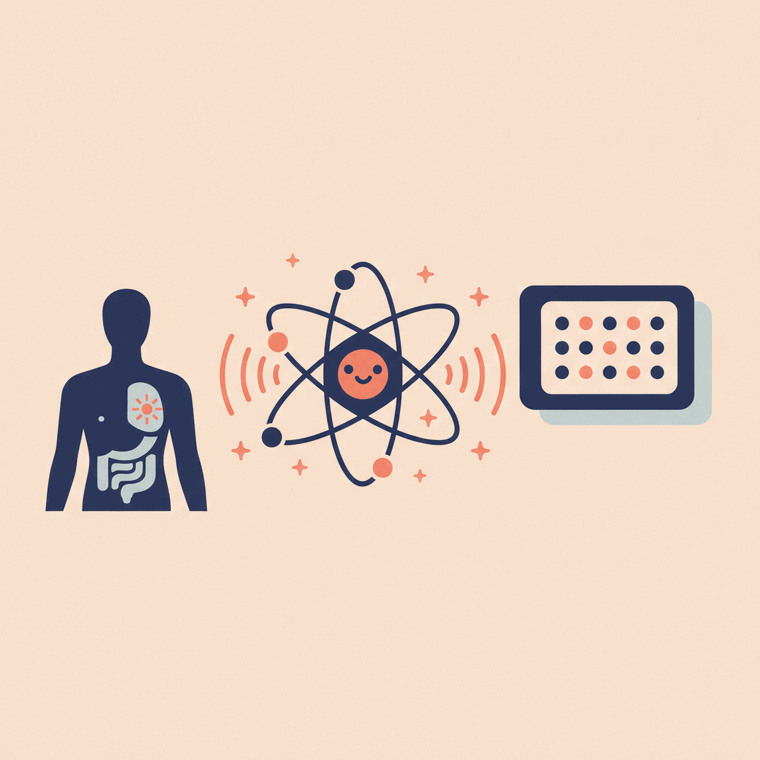
The tracer is the heart of a nuclear medicine scan. Here's what a radiopharmaceutical is, why it goes where it does, the common types, and why it leaves your body so quickly.
 Technology
SPECT is a 3D form of nuclear medicine, often combined with a CT. Here's how SPECT and SPECT-CT work, what they add over a standard scan, and what to expect.
 Scans
ScansA nuclear medicine thyroid scan uses a tracer to show how your thyroid gland is functioning — useful for an overactive thyroid or to assess nodules. Here's how it differs from a thyroid ultrasound.
 Which scan?
A VQ (ventilation/perfusion) scan is a nuclear medicine test for a pulmonary embolism — often used instead of a CTPA in pregnancy or when contrast is a concern. Here's how it works.
Browse all 12 imaging topics, or jump straight to costs and Medicare.