 Basics
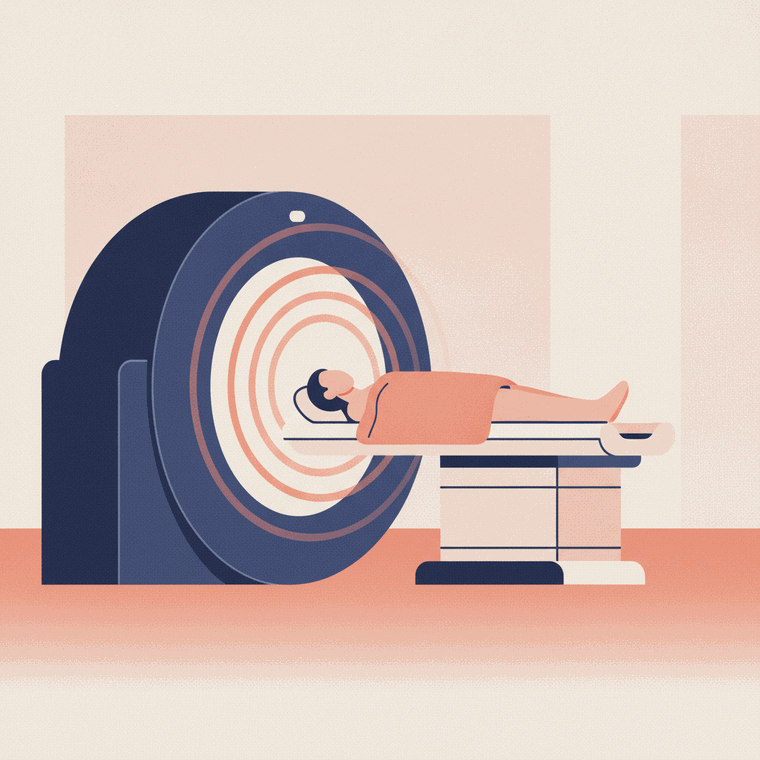
An MRI uses magnets and radio waves — not radiation — to take remarkably detailed pictures of soft tissue. Here's how it works, what it's used for, what a scan is actually like in Australia, and how to prepare.
 Technology
A 3 Tesla MRI has a magnet twice as strong as a standard 1.5T scanner. Here's what that extra power does — clearer images, sometimes faster scans — and when it does (and doesn't) matter.
 Technology
Functional MRI maps brain activity by tracking blood flow. Here's how it differs from a standard MRI, where it's used — mainly planning brain surgery and research — and what taking part is like.
 Basics
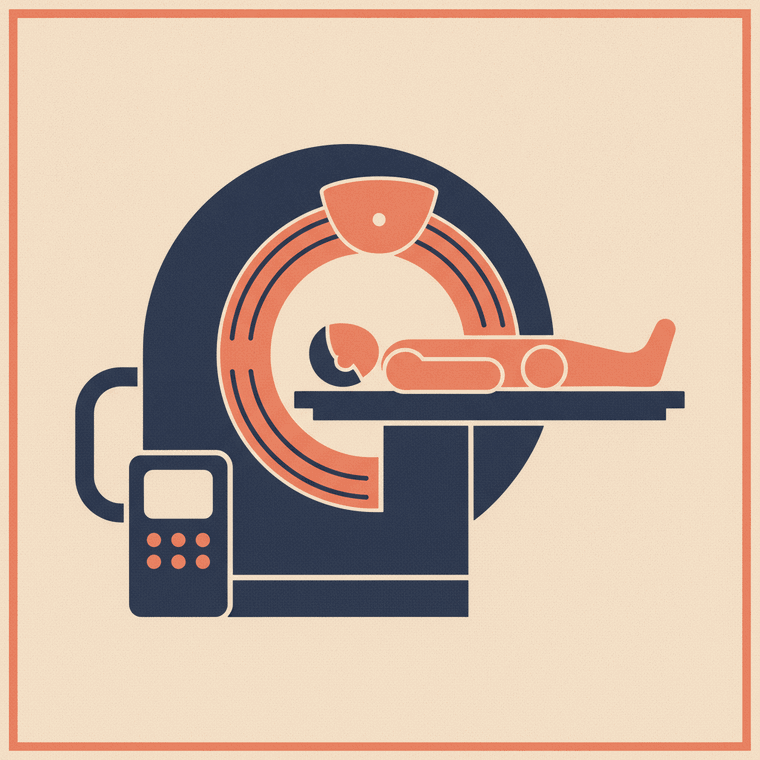
MRI stands for magnetic resonance imaging. Here's how an MRI scanner actually works — using magnets and radio waves, not radiation — in plain English.
 What to expect
Most MRI scans take about 15–45 minutes, depending on the body part and whether contrast is used. Here's a breakdown by scan, why it varies, and how to make the time easier.
 Preparing
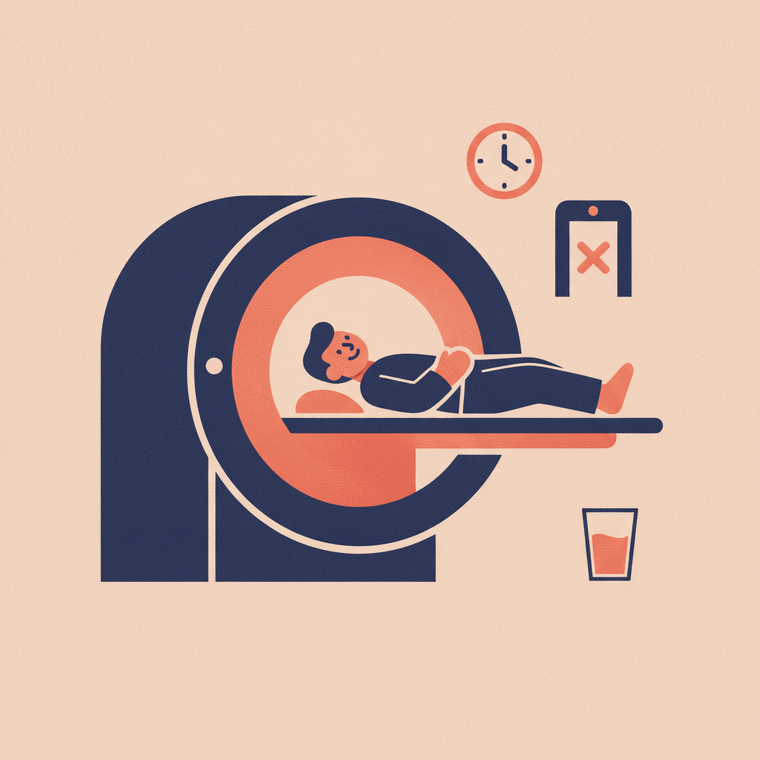
Most MRIs need little prep — but the metal-and-implant safety check is essential, and a few scans need fasting. Here's exactly what to declare, what to leave at home, and what to bring.
 Safety
MRI uses no radiation and is very safe — but the powerful magnet makes metal the real issue. Here's what to tell your radiographer, how implants and contrast are handled, and what to do about claustrophobia.
 Body parts
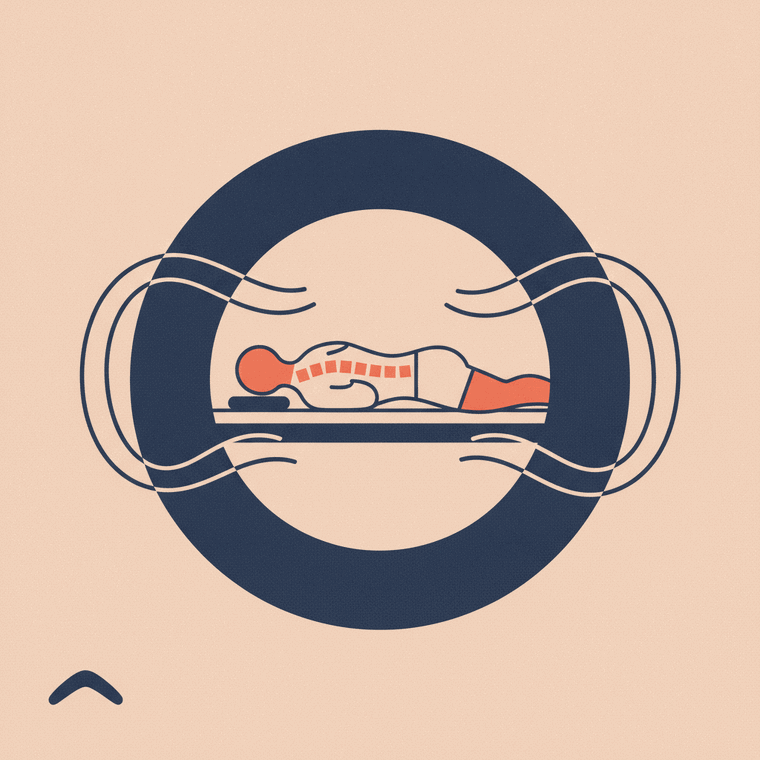
MRI is powerful for serious spinal problems — but for most ordinary back pain, Australian guidelines say a scan isn't needed and can do more harm than good. Here's when an MRI helps, when it doesn't, and the red flags that change the answer.
 Body parts
A brain MRI gives an exceptionally detailed, radiation-free look at the brain. Here's what it's used to investigate — from stroke and MS to headaches and memory problems — and what the scan is like.
 Body part
A hip MRI is the best scan for soft-tissue and early bone problems — labral tears, avascular necrosis and stress fractures. Here's what it shows and what to expect, with no radiation.
 Body part
A knee MRI is the best scan for soft-tissue injuries — ligaments (like the ACL), the meniscus and cartilage. Here's what it shows, what to expect, and the radiation involved (none).
 Body part
A shoulder MRI is the best scan for the rotator cuff, labrum and tendons. Here's what it shows, when an MR arthrogram is used, and what to expect — with no radiation.
 Results
A radiologist interprets your MRI and reports to your doctor — not on the day. Here's how the process works in Australia, how long it takes, what the report actually says, and how to get a copy of your images.
 Technology
If the standard MRI tunnel worries you, open and wide-bore scanners can make the scan far more comfortable. Here's how they differ, the trade-offs, and what to ask when you book in Australia.
 Uses
UsesFrom the brain to the knees, MRI can investigate an enormous range of conditions. Here's what it's used to diagnose across each part of the body — and the few things other scans do better.
Browse all 12 imaging topics, or jump straight to costs and Medicare.