The 12-week scan (done about 11 to 13½ weeks) checks your baby's early development and dates, and measures the nuchal translucency — a small fluid space at the back of the baby's neck. Combined with a blood test and your age, this gives a risk estimate for chromosomal conditions like Down syndrome — it's a screening test, not a diagnosis. It's optional, uses no radiation, and a higher-risk result leads to more accurate follow-up tests (NIPT or a diagnostic test).
Key takeaways
- Done about 11 to 13½ weeks; checks development and dates.
- The nuchal translucency + a blood test + your age give a risk estimate.
- It's a screening test (a probability), not a diagnosis.
- It's optional; a higher-risk result leads to more accurate follow-up tests.
The 12-week scan is a milestone in pregnancy — part check-up, part optional screening. Here’s what it involves and, importantly, what the results do and don’t mean.
What the scan checks
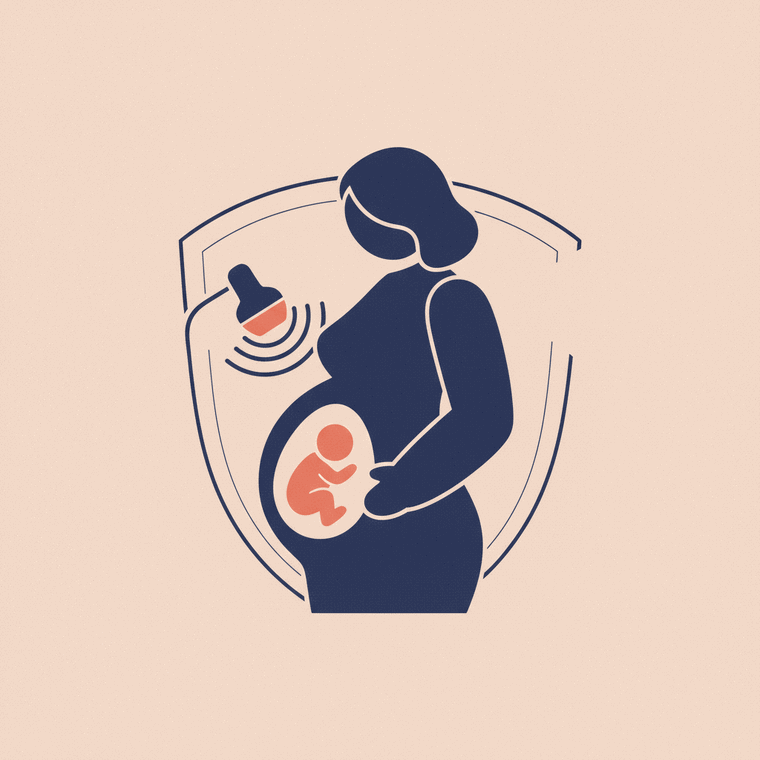
Done at about 11 to 13½ weeks, the scan looks at your baby’s early development — the head, limbs, abdominal wall — confirms the dates and the number of babies, and measures the nuchal translucency (NT): a small fluid space at the back of the baby’s neck that all babies have at this stage.[1] It uses sound waves — no radiation.
The screening part (optional)
The NT measurement, on its own, isn’t the whole story. In Australia it’s usually combined into combined first-trimester screening:[1]
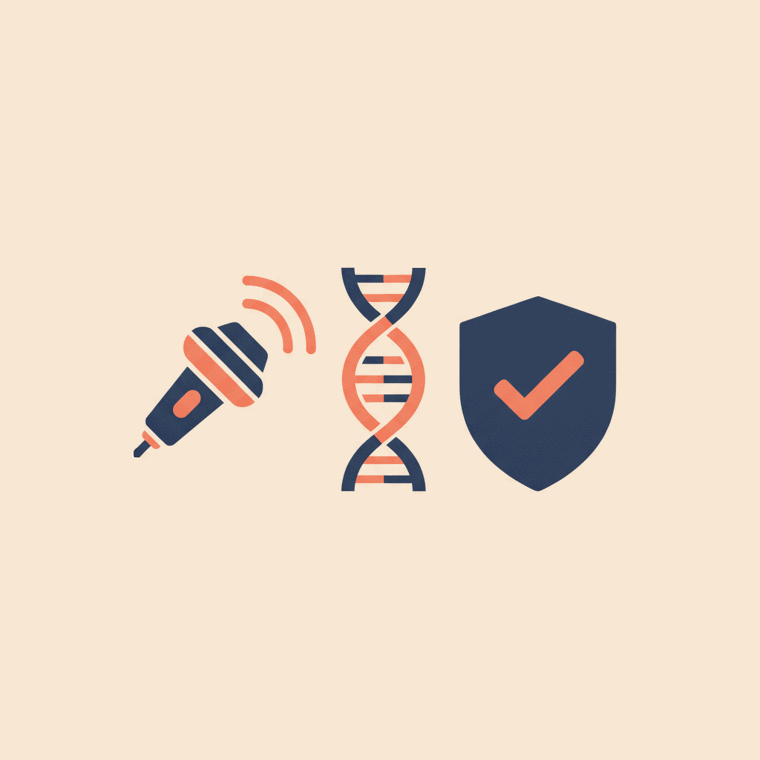
NT measurement + a maternal blood test + your age → a risk estimate for chromosomal conditions such as Down syndrome (trisomy 21) and a couple of others.
The crucial point: this is a screening test, which gives a probability (for example “1 in 900”), not a diagnosis.[2] Most people who get a “higher-risk” result go on to have a baby without the condition. Screening is entirely your choice — some parents want it, others prefer not to know or to skip straight to another test.
If the result is higher-risk
A higher-risk result doesn’t mean something is wrong — it means a more accurate test is offered:[2]
- NIPT (non-invasive prenatal test) — a blood test analysing the baby’s DNA, more accurate for the common trisomies (often available earlier, but usually has an out-of-pocket cost in Australia and is still a screening test).
- A diagnostic test — CVS or amniocentesis, which give a definite answer but carry a small procedure risk.
Your doctor or midwife talks you through the options; nothing happens without your consent.
What to expect
It’s usually done over the abdomen (sometimes with a full bladder), takes about 30 minutes, and needs precise measurements — so the sonographer may wait for the baby to be in a good position. The ultrasound attracts a Medicare rebate with a referral; the blood test and any NIPT have their own costs. See our dating scan and pregnancy ultrasound guides for the other scans.
Frequently asked questions
Is the 12-week scan the same as the nuchal translucency scan?
They’re the same appointment — the 12-week scan includes the nuchal translucency measurement, which (with a blood test and your age) forms the combined first-trimester screening.[1]
Does a “higher-risk” result mean my baby has Down syndrome?
No — it’s a probability, not a diagnosis. Most higher-risk results are followed by a normal result on a more accurate test. Your doctor explains the options.[2]
Do I have to have this screening?
No — it’s completely optional. You can choose the combined screening, go straight to NIPT, or decline screening altogether. It’s your decision.[2]
Prenatal screening involves personal choices and can raise difficult feelings. Your doctor, midwife or a genetic counsellor can help you think it through, and support is available whatever you decide.
Sources
- Pregnancy, Birth and Baby (healthdirect) — Combined first trimester screening — www.pregnancybirthbaby.org.au/combined-first-trimester-screening
- Australian Government Department of Health — Prenatal screening & testing — www.health.gov.au/topics/pregnancy-birth-and-baby/prenatal-testing
- RANZCR / InsideRadiology — Ultrasound (Coombs) — www.insideradiology.com.au/ultrasound-hp/