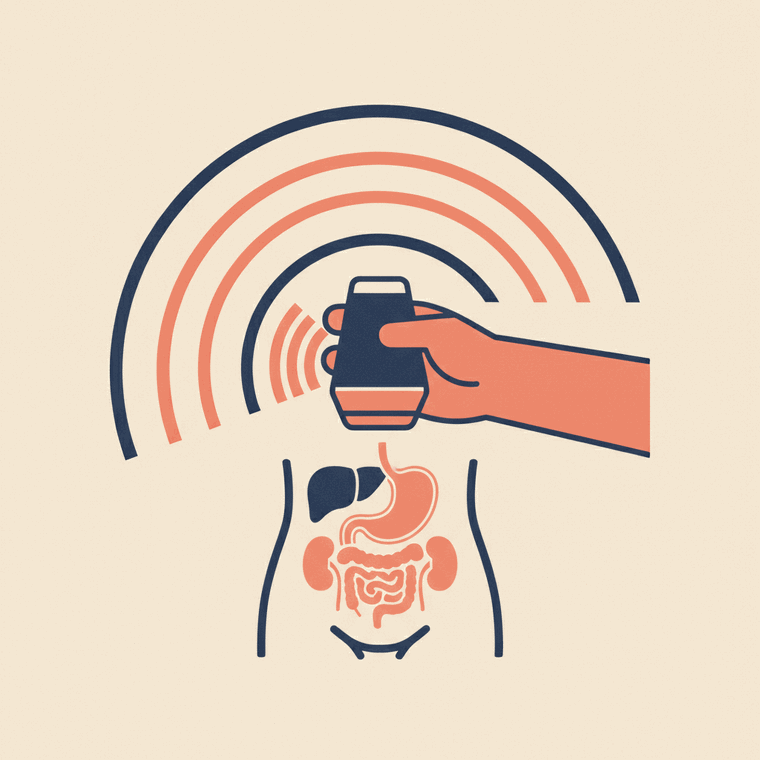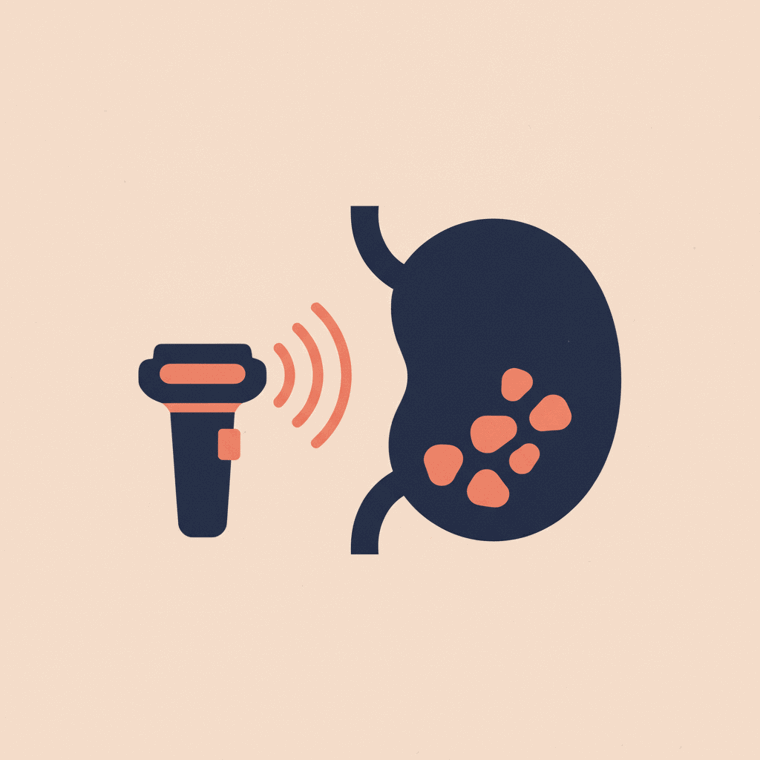
The main test for suspected gallstones is an abdominal ultrasound — it uses no radiation, is highly accurate for stones, and shows the gallbladder wall and bile ducts. If the picture is unclear or a duct blockage is suspected, an MRCP (a special MRI of the bile ducts) or a HIDA scan (a function test) may follow; CT is used for complications. Ultrasound is usually the first and often only scan needed.
Key takeaways
- Abdominal ultrasound is the main, radiation-free test for gallstones.
- It's highly accurate for stones and shows the gallbladder and ducts.
- MRCP (an MRI of the bile ducts) or a HIDA scan may follow if unclear.
- CT is mainly for complications, not first-line stone detection.
Gallstones are common, and when they cause pain (typically in the upper-right abdomen), imaging is how they’re confirmed. One test does most of the work.
Ultrasound — the first and usual test
An abdominal ultrasound is the main test for suspected gallstones.[1] It uses no radiation, is quick, and is highly accurate at finding stones in the gallbladder. It also shows:[2]
- the gallbladder wall (thickening can signal inflammation — cholecystitis);
- the bile ducts (widening can suggest a blockage);
- nearby organs like the liver.
You’ll usually be asked to fast for several hours beforehand, so the gallbladder is full and easier to see. It’s painless — gel and a probe over your upper abdomen.
When another scan is added
Ultrasound is often the only scan needed. But sometimes the picture is incomplete:[2]
- MRCP — a special MRI of the bile ducts (no radiation, no contrast injection needed) used when a stone in a duct is suspected but not clearly seen.
- HIDA scan — a nuclear medicine function test, used when the gallbladder looks normal but symptoms continue (see our HIDA scan guide).
- CT — mainly for complications or when the diagnosis is uncertain, not for routine stone detection.
In Australia
An ultrasound for gallbladder symptoms needs a referral and usually attracts a Medicare rebate; many clinics bulk bill. For what the scan is like, see our guides to abdominal ultrasound and ultrasound preparation.
Frequently asked questions
What’s the best scan for gallstones?
An abdominal ultrasound — it’s radiation-free, quick and highly accurate for gallstones, which is why it’s the first test.[1]
Do I need a CT for gallstones?
Usually not — ultrasound is better for detecting stones. CT is mainly used if a complication is suspected or the diagnosis is unclear.[2]
Why do I have to fast before a gallbladder ultrasound?
Fasting keeps the gallbladder full, which makes stones and the gallbladder wall much easier to see.[1]
Sources
- RadiologyInfo.org (RSNA & ACR) — General Ultrasound — www.radiologyinfo.org/en/info/genus
- RANZCR / InsideRadiology — Ultrasound (Coombs) — www.insideradiology.com.au/ultrasound-hp/
- healthdirect (Australia) — Gallstones — www.healthdirect.gov.au/gallstones