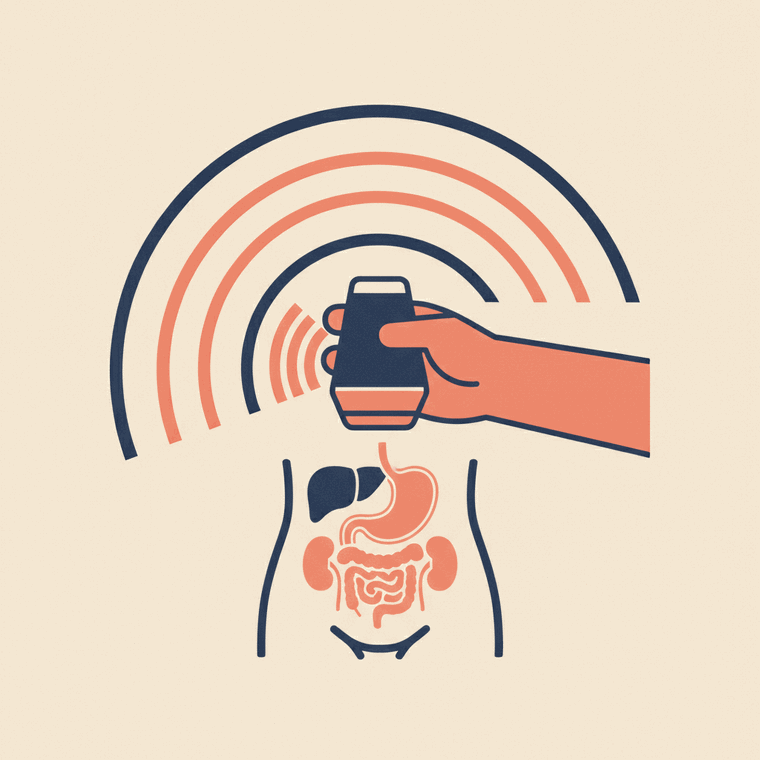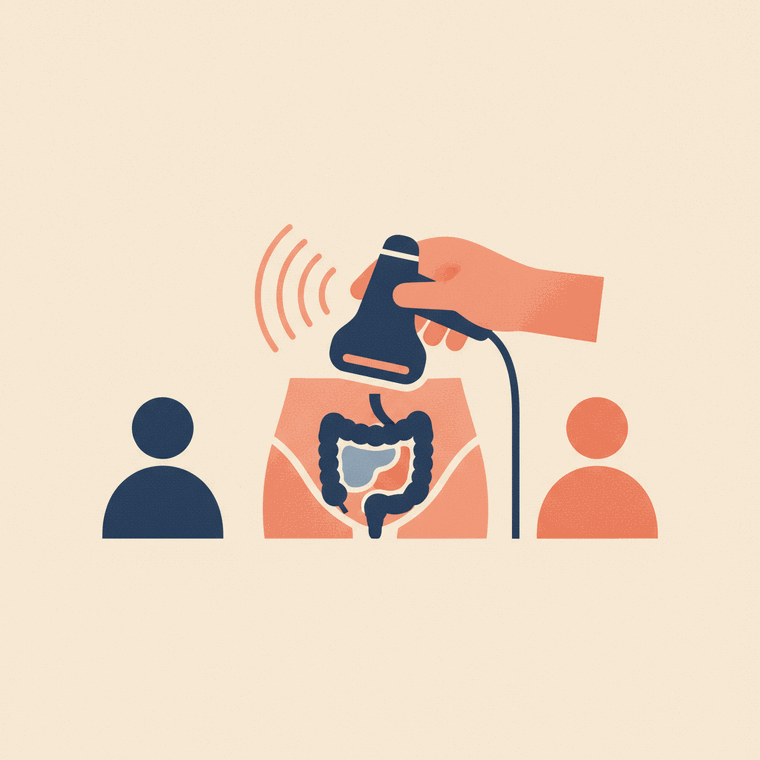
Preparation for an ultrasound depends entirely on which part of the body is being scanned. An upper-abdomen scan (liver, gallbladder) usually needs fasting for several hours. A pelvic scan (bladder, uterus, early pregnancy) often needs a full bladder — you drink water and don't go to the toilet beforehand. Many scans — thyroid, breast, muscles and joints — need no preparation at all. Your clinic will give you the specific instructions when you book.
Key takeaways
- Preparation depends on the body part being scanned.
- Upper-abdomen scans usually need fasting for a few hours.
- Pelvic scans often need a full bladder (drink water, don't urinate).
- Thyroid, breast and muscle scans usually need no preparation.
Unlike most scans, ultrasound preparation isn’t one-size-fits-all — it depends on which part of the body is being examined. Getting it right means your scan gives a clear picture and doesn’t need repeating.[1]
If you’re having an upper-abdomen scan
For the liver, gallbladder, pancreas or bile ducts, you’ll usually be asked to fast for several hours beforehand (often no food for around 6–8 hours; babies and children fast for less).[1] The reason: fasting empties the gallbladder and reduces bowel gas, giving a clearer view. Your clinic will tell you the exact fasting time.
If you’re having a pelvic scan
For the bladder, uterus, ovaries or an early pregnancy, you’ll often need a full bladder. You’ll be asked to drink several glasses of water an hour or two beforehand and not go to the toilet.[1] A full bladder lifts and improves the view of the pelvic organs. (A transvaginal scan, done with an internal probe, may be used instead or as well — and that one usually needs an empty bladder, so follow your specific instructions.)
If you’re having a thyroid, breast, muscle or vascular scan
These generally need no preparation — just come as you are, and wear something that gives easy access to the area.[1]
For any ultrasound
- Wear loose, comfortable clothing; you may change into a gown.[1]
- Bring your referral, Medicare card, and any previous scans of the area.
- If you’re unsure about the preparation, ring the clinic — it’s much better than arriving unprepared and having to rebook.
Frequently asked questions
Why do I have to fast before an abdominal ultrasound?
Fasting empties the gallbladder and cuts down bowel gas, both of which give a much clearer view of the liver, gallbladder and nearby organs.[1]
Why do I need a full bladder for a pelvic scan?
A full bladder pushes the bowel out of the way and creates a clear “window” to see the uterus, ovaries or an early pregnancy. That’s why you drink water and hold on beforehand.[1]
What if I’m not sure how to prepare?
Call the clinic before your appointment. Preparation varies by scan type, and getting it right avoids a repeat visit.[1]
Sources
- RadiologyInfo.org (RSNA & ACR) — General Ultrasound (how to prepare) — www.radiologyinfo.org/en/info/genus
- RANZCR / InsideRadiology — Ultrasound (Coombs) — www.insideradiology.com.au/ultrasound-hp/