 Basics
Radiology is the use of imaging — X-ray, ultrasound, CT, MRI and nuclear medicine — to diagnose and guide treatment. Here's a plain-English overview of how each works and who's involved.
 Technology
Artificial intelligence is increasingly used in radiology — but it assists radiologists rather than replacing them. Here's how it's used and how it's governed in Australia.
 Examples
Real-world examples make imaging click. Here are common situations and the scan usually used — from a broken wrist to a suspected stroke or gallstones.
 Basics
Diagnostic radiology means using imaging to diagnose disease — as opposed to interventional radiology, which uses imaging to treat it. Here's what the term covers, in plain English.
 Basics
Some scans capture the body in motion, not just a still snapshot. Here's what dynamic (real-time) imaging is, where it's used, and how it differs from a static scan.
 Early detection
Finding disease early often means better outcomes — and imaging is central to that. Here's how screening and early detection work, with their benefits and limits.
 Accuracy
Imaging makes diagnosis far more accurate — but no scan is perfect. Here's how imaging sharpens a diagnosis, and the limits worth understanding.
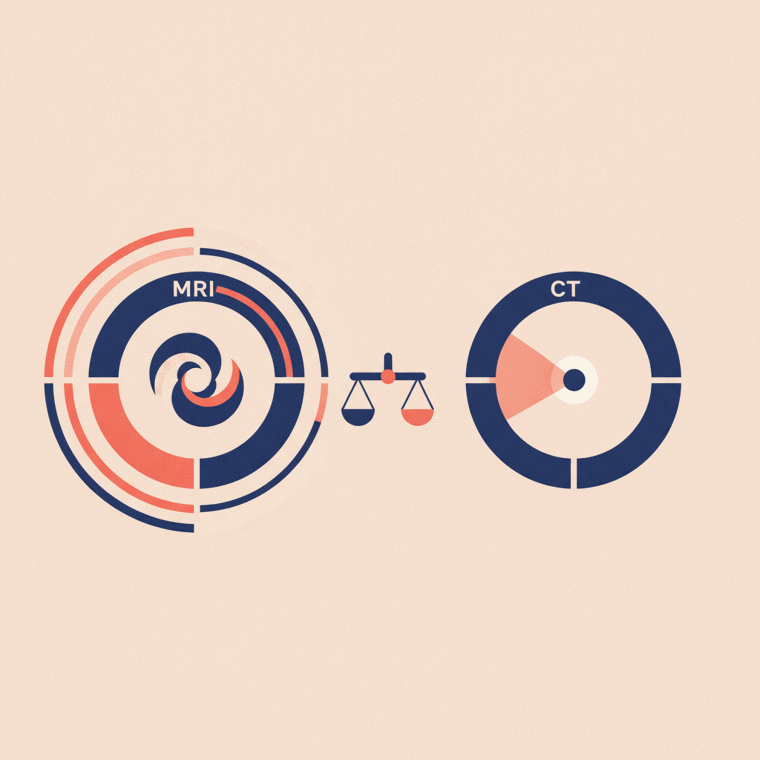 Compare
MRI and CT look similar but work very differently. Here's a plain-English comparison — what each is best for, radiation, speed — and why a 'CAT scan' is just another name for a CT.
 FAQs
FAQsQuick, plain-English answers to the most common questions about medical imaging — safety, radiation, referrals, costs, pregnancy and results — each linking to a fuller guide.
 Trends
Where medical imaging is heading — how artificial intelligence is assisting radiologists, why scanners are getting faster and lower-dose, and what it means for patients.
 History
X-rays were discovered by accident in 1895 — and transformed medicine almost overnight. Here's the story, from Röntgen's discovery to the scans we have today.
 Basics
X-ray, CT, ultrasound, MRI and nuclear medicine each work on a different physical principle. Here's a plain-English guide to how each technique actually works.
 Basics
Diagnostic imaging is the umbrella term for the scans that let doctors see inside the body. Here's what it covers, how the main types differ, and structure vs function.
 Uses
UsesRadiology does far more than diagnose — it screens, guides treatment and monitors disease. Here's the full range of what medical imaging is used for.
 Basics
Radiology is the branch of medicine that uses imaging — X-ray, ultrasound, CT, MRI and nuclear medicine — to diagnose and treat disease. Here's a plain-English definition and what it covers.
 Which scan?
Different symptoms call for different scans. This plain-English guide maps common problems — kidney stones, gallstones, chest clots, appendicitis and more — to the scan usually used, and why.
 Compare
X-ray, CT, ultrasound or MRI — which is right for which problem? Here's a practical, at-a-glance comparison of what each scan is best at, and the radiation involved.
 Compare
The main imaging tests each have different strengths. Here's a plain-English comparison of X-ray, CT, ultrasound and MRI — what each is best at, and which use radiation.
Browse all 12 imaging topics, or jump straight to costs and Medicare.